


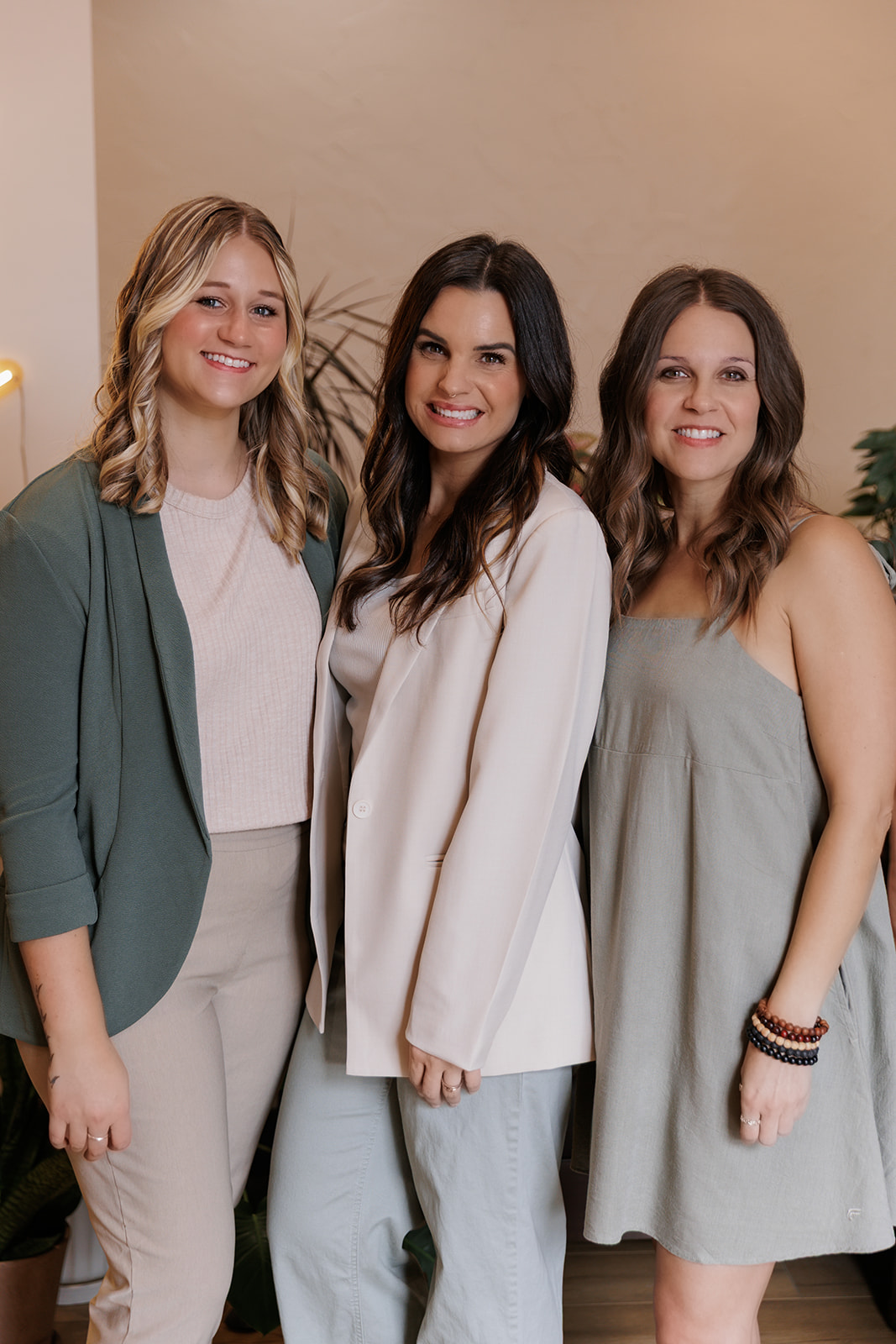
By Mellissa Perry Hill, MS, LPC, Inner Compass Counseling & Consultation
A client sat across from me not long ago and said something I hear all the time, in one form or another. “I left the church. I don’t believe the things I used to believe. But sometimes I still want to pray, or light a candle, or feel like something bigger than me exists. Is that allowed? Or does that make me a hypocrite?”
I hear a version of this question all the time. It comes from people all over Arizona and Utah. Some grew up LDS (Mormon). Others grew up Catholic or non-denominational. Leaving organized religion is a huge step. But it often leaves a strange, empty space behind it. You worked hard to get out. Now you are standing there wondering if you have to lose your spirituality too.
Here is what I tell my clients, and what I want to tell you: no, you do not. You can absolutely still be spiritual after leaving organized religion. In fact, for a lot of people, that is where their real spiritual life finally begins.
Why This Question Feels So Confusing
For most of your life, “spiritual” and “religious” were probably the same word. You went to church, temple, or mass. You followed the rules, said the prayers, and believed the doctrine. That was your whole spiritual life, all wrapped into one system.
So when you leave that system, it makes sense that your brain treats spirituality like it left too. But religion and spirituality are not actually the same thing. Religion is a structure: a set of beliefs, leaders, and rules. Spirituality is something smaller and bigger at the same time. It is your sense of connection. Connection to yourself, to other people, to nature, or to something you cannot fully explain.

Spirituality and religion are not the same things.
You can walk away from a structure that hurt you and still keep that sense of connection. You just have to learn how to build it yourself, instead of having it handed to you.
A Book That Names This Exact Problem
I recently read No Nonsense Spirituality: All the Tools, No Belief Required by Brittney Hartley, and I have been recommending it to clients ever since. The whole point of the book is right there in the subtitle. You do not need a specific belief system, a church, or a set of doctrines to have a real spiritual life. You just need some tools and a willingness to explore.
Hartley walks through spiritual practices that show up across almost every culture and religion in history: ritual, awe, stillness, storytelling, connection to nature, community, and a sense of your own moral compass. Instead of telling you what to believe, she asks you questions and lets you find your own answers. That approach matters, especially if you grew up being told exactly what to think and feel. A book that asks instead of tells can feel like fresh air.
Spirituality Is a Toolbox, Not a Membership Card
One of the most helpful ideas I have come across lines up closely with what Hartley writes about. It comes from a resource called the Tree of Contemplative Practices. It maps out the many ways humans connect to something bigger than themselves. It groups them into a few branches:
Stillness practices, like meditation, quiet, and centering. Movement practices, like yoga, walking, or tai chi. Creative practices, like journaling, music, and art. Relational practices, like deep listening and storytelling. Ritual practices, like creating a sacred space or marking the seasons. Active practices, like volunteering, activism, and bearing witness for others.
Notice that religion is not the only branch on this tree. It is one branch among many. You can pick and choose the ones that actually feel true to you, instead of the ones you were told to use.
Questions Worth Sitting With
Hartley’s book is built around journaling questions, and I think that format is powerful for anyone rebuilding a spiritual life after religion. Here are a few, inspired by her work, that I often bring into sessions:
What rituals did you love as a kid, before anyone told you they were wrong or “not real”? Could you bring any of them back in a way that feels honest now?
When was the last time you felt true awe? Was it a sunset over the desert, a piece of music, or holding a newborn? What does that feeling tell you about what actually moves you?
What is your moral compass now, separate from the rules you were handed? What do you believe is right and wrong, based on your own life and experience, not someone else’s sermon?
Where do you feel most connected: in nature, in community, in quiet, in movement, in creating something? That answer is a clue about where your spirituality actually lives.
There are no wrong answers here. The goal is not to replace one set of rules with another. The goal is to notice what is already true for you.
You Are Allowed to Take What Worked and Leave the Rest
I want to name something that trips a lot of people up. You do not have to reject everything from your religious upbringing to heal from it. Maybe you loved the sense of community. Maybe you loved a specific holiday tradition, a piece of music, or a quiet moment of prayer. You are allowed to keep what genuinely nourished you and let go of what hurt you.
This is not about being a “bad” ex-Mormon, ex-Catholic, or ex-anything. It is not about proving your deconstruction is complete. It is about building something that is actually yours. A 2025 piece from the American Psychological Association’s Monitor on Psychology backs this up. People rebuilding a life after religion often do best when they focus on building new meaning and connection. It is not enough to just tear the old structure down. Building matters as much as leaving.
Spirituality After Religion in Arizona and Utah
I practice in Arizona, and I work with a lot of people connected to Utah as well. This question comes up constantly here, especially with clients navigating life after Mormonism, but also with people raised Catholic or in non-denominational churches. Faith was often woven into family, school, and community in a way that made it hard to separate “religious” from “spiritual” in the first place.
If you are in Gilbert, Mesa, Chandler, Tempe, Queen Creek, or anywhere else in Arizona or Utah, you may be quietly wondering the same thing. Are you still allowed to believe in something, even a small, undefined something? You are far from alone. This is one of the most common questions I hear in my office.
If you want to read more about life after a high-control religion, we have also written about finding a real sense of community after leaving. It often goes hand in hand with rebuilding a spiritual life.
You Do Not Have to Figure This Out Alone
Rebuilding a spiritual life after religion is not something you have to do alone, with just a journal and a highlighted paperback. It helps to have support while you sort out what is truly yours to keep, and what you are finally free to let go of.
Our team at Inner Compass Counseling currently has two clinicians with openings: Jessica Dawson, LPC and Ashley Kirkpatrick, LAC. Both work closely with clients navigating religious trauma and faith transitions across Arizona and Utah. You can view their schedules and book a session here.
Every clinician on our team is supervised or consulted by me directly. That means when you sit down with any member of our staff, even our newest clinicians, you also get the benefit of my years of experience with religious trauma and faith transitions. You are never getting “less than.” You are getting our whole team behind you.
You are allowed to still believe in something. You just get to decide what that something is.
Stay Connected
Want more posts like this on religious trauma, faith transitions, and life after leaving organized religion? Subscribe to our newsletter here.
Sources
- Hartley, B. L. (2024). No Nonsense Spirituality: All the Tools, No Belief Required. Row House Publishing.
- The Center for Contemplative Mind in Society. The Tree of Contemplative Practices. contemplativemind.org/practices/tree
- American Psychological Association. (2025). Rebuilding a full life after walking away from organized religion. Monitor on Psychology. apa.org/monitor/2025/06/meaningful-life-after-religion

Be the first to comment